

The US-China trade war isn’t just politics: it’s changing our everyday experience in ways both subtle and spectacular. Buckle up for a ride through tariffs, television drama-level negotiations, and why even the Fourth of July might look different.
When Trade Policy Hits the Plumbing: How Tariffs Leak Into Real Life
Tariffs Aren’t Just Numbers—They’re Your Leaky Faucet
Let’s get real for a second. Tariffs sound like something that only matters to economists or politicians. But honestly? They decide whether your plumber can finish your bathroom this month—or next year.
Once ago construction and real estate have become the unexpected battleground for this economic drama. It’s not just about GDP. It’s about whether you can get a pipe, a piece of drywall, or even a doorknob when you need it - just remember the covid-situation.
The Supply Chain Domino Effect
Day one: the plumber shows up, ready to work.
Day two: the electrician is scheduled, but—wait—the plumber’s still waiting on pipes.
Day three: drywall guy is on standby, but can’t start until the plumbing’s done.
Why the holdup? The pipes were supposed to come from China. Now, they’re stuck in a warehouse, or maybe not even shipped at all. One missing shipment, and the whole project stalls. Consider this situation in just-in-time environments like in the automotive industry.
Haunted by Timber—And Empty Shelves
One can look back and remember 2020 and 2021. Timber prices went through the roof.

TradingEconomics: Lumber prices
Home Depot shelves were empty. Developers were scrambling, and projects just… stopped. The economy was hit hard.
Developers who are now extra cautious. Some are even postponing projects. Why risk it, when the next shortage could be just around the corner?
Construction: The Pulse of the Economy
There’s a saying I’ve heard—maybe you have too
"When construction is good, the economy is fine."
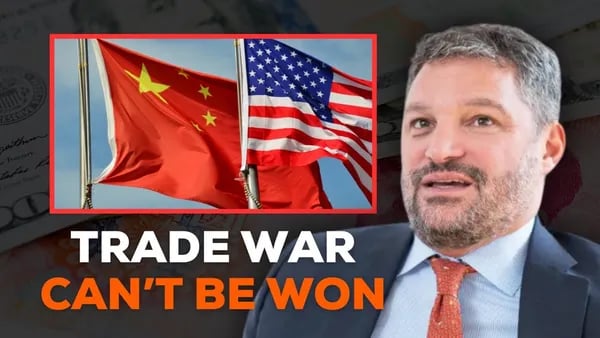
It’s true. Construction is a massive employer in the US. But it’s also incredibly sensitive to supply disruptions. If one piece of the puzzle is missing, the whole thing falls apart. As stated recently by Louis Vincent Gave an outlined specialist of Global markets:
It’s Not Just Houses—It’s Holidays, Too
No fireworks for the 4th of July?
No Halloween decorations?
No toys for Christmas?
Sounds dramatic, but it’s real. So much of what we celebrate, decorate, or gift comes from overseas—often China. If supply chains keep spluttering, we all feel it. Not just in our wallets, but in our daily lives.
The Bigger Picture on China’s Numbers
China’s trade surplus at nearly $90 billion a month now. Five years ago, it was about $20 billion.

TradingEconomics: China Trade Surplus,
17% of China’s exports go to the US. Even if that surplus drops to $60 billion, China keeps humming along.
So, while we’re sweating over missing pipes and empty shelves, China’s economy barely blinks. That’s a tough pill to swallow.
Picking Sides in the Playground: The Real Global Game of Telephone
Trade Wars: Forced Choices and Shifting Rules
Let’s be honest—trade wars are about trust. When the US tells countries, “Pick a side,” it’s like being back on the playground. But who wants to play with the kid who keeps changing the rules halfway through the game? That’s what it feels like for a lot of world leaders right now.
Trade wars force countries to choose sides. But the rules? They keep shifting. One day it’s tariffs, the next it’s a new deal, then—wait, never mind, the deal’s off.
Trump’s approach creates skepticism. Foreign leaders are left wondering: will any agreement actually stick?
Who’s Really on Team USA as per Louise Vincent Gave?
Here’s a number that’s hard to ignore: out of 170 countries, 120 do more trade with China than with anyone else. That’s not a typo (!). Only Mexico and Canada trade more with the US. So, when Washington tries to build an anti-China coalition, the odds aren’t exactly stacked in its favor.
Countries like Vietnam, Indonesia, and Malaysia? Their economies lean heavily toward China.
For them, picking the US over China isn’t just risky—it’s almost unthinkable.
Trust Issues: Would You Make a Deal?
I keep coming back to a conversation I had with a friend in private equity. He said there are two types of tough negotiators. The first, you respect—even if they’re hard on you, you want them on your side next time. The second? You walk away thinking, “Never again.” As Louis Vincent Gave bluntly put it:
"If you're the president of Indonesia...do you walk away from Trump thinking 'I never want to deal with him again'?"
That’s the real question. Trump’s reputation for walking away from deals, or changing terms at the last minute, makes other leaders nervous. If you’re running a country, do you risk your economy on a handshake that might not mean much tomorrow?
The Global Bifurcation: It’s Not Just Black and White
The world isn’t splitting neatly into US vs. China. Most countries can’t afford to alienate Beijing. The US’s influence is shrinking, not because leaders don’t like America, but because their economies depend on China. It’s a tough spot.
Imagine being forced to pick a team, knowing your best customer is on the other side.
That’s the reality for most of the world right now.
So, as trade wars heat up, the global game of telephone gets messier. The US can ask countries to pick sides, but for most, the answer is already written in the trade numbers.
War Stories From Economics and the Real Battlefield
Let’s be honest. Winning a trade war—or any war, really—isn’t just about who has the best strategy or the sharpest policy. It’s about resilience. It’s about appetite. If the people aren’t behind you, you’re just not going to win. France fought wars in places like Algeria and China, and most people back home didn’t care much. The result? They lost. Simple as that.
The United States has its own history here. Vietnam. Iraq. Afghanistan. All lost, not because the military wasn’t capable, but because the public lost interest. The lesson is clear: "If there's no appetite for the war, you end up not winning it." That’s not just true for boots on the ground. It’s true for economic battles too.
Trade Wars: The Real Battlefield
Right now, the so-called “trade war” with China is a perfect example. Sure, politicians talk tough. But let’s look at the facts stated above. China’s trade surplus is around $90 billion a month. Seventeen percent of their exports go straight to American consumers. If tariffs go up, prices rise at Walmart and Home Depot. And let’s be real—Americans don’t want to pay more for everyday stuff - and how are the big companies like Walmart reacting. The appetite for economic pain? It’s just not there.
So, what happens when you try to fight a war—economic or otherwise—without public support? History says you lose. Every time. We can talk about policy until we’re blue in the face, but if the majority of Americans aren’t willing to make sacrifices, the outcome is already written.
Hot War With China? Not Likely
If even the world’s top warriors are questioning American dominance, maybe it’s time to rethink what winning looks like. Maybe it’s not about out-muscling the other side. Maybe it’s about outlasting them. Or maybe, it’s about knowing when the public just isn’t hungry for another fight.
In the end, resilience and appetite decide the outcome—on the battlefield and in the boardroom. If the people aren’t willing to pay the price, no amount of policy or firepower will get you across the finish line.