




This post should unravel the intricate world of natural resources, particularly as major global shifts hint at potentially lucrative investment opportunities. But why does understanding this sector feel like navigating through a dense fog?
Historical Context: Lessons from Past Commodity Cycles
The commodities market has a rich history, filled with lessons that can guide investors today. Over the past 125 years, commodities have reached points of extreme undervaluation. This phenomenon is not new. It has occurred during several key historical periods: 1929, 1969, 1999, and 2020. Each of these years marked significant downturns in commodity prices, often influenced by central bank policies.
Extreme Undervaluation Points
What does it mean when commodities are undervalued? Simply put, it indicates that their prices are lower than their intrinsic value. This situation often arises during severe bear markets. For instance, during the years mentioned, commodities experienced declines ranging from 60% to 90%. Such drastic drops can create opportunities for savvy investors.
Key Historical Periods
1929: The stock market collapse led to a significant exit from the gold standard.
1969: Changes in monetary policy under President Johnson affected commodity prices.
1999: The dot-com bubble burst, leading to a reevaluation of asset values.
2020: The pandemic caused historical lows in commodity pricing.
Each of these periods not only saw severe bear markets but also highlighted the cyclical nature of commodities. They often recover and outperform equities after such downturns. This pattern raises an interesting question: could we be on the verge of another recovery?
Impact of Central Bank Policies
Central bank policies play a crucial role in shaping commodity pricing trends. Loose monetary policies can lead to excessive monetary creation, which often results in market frenzies. Lee Goehring from Goehring & Rozenzwajg noted during an actual interview,
"...history is poised to repeat itself today."
This statement suggests that current market conditions may mirror those of past cycles, potentially leading to a resurgence in commodity prices.
As investors look to the future, they should consider these historical lessons. The past has shown that commodities can significantly outperform equities after periods of extreme undervaluation. Understanding these cycles can provide valuable insights into future market behavior.
In conclusion, the historical context of commodities reveals a pattern of extreme undervaluation followed by recovery. Investors who recognize this trend may find opportunities in the current market landscape.
Current Market Dynamics: Speculation vs. Reality
In today's financial landscape, the interplay between speculation and reality shapes commodity prices. Understanding this relationship is crucial for investors. Financial speculation can drive prices up or down, often disconnected from the underlying value of the commodities themselves.
Understanding Financial Speculation
Financial speculation plays a significant role in commodity pricing. It can create bubbles or lead to sharp declines. For instance, when investors flock to a particular commodity, prices can skyrocket, even if the supply and demand fundamentals don’t support such valuations. Take a look at the recent Cacoa futures chart to illustrate the huge upswing from January 2024 onwards:
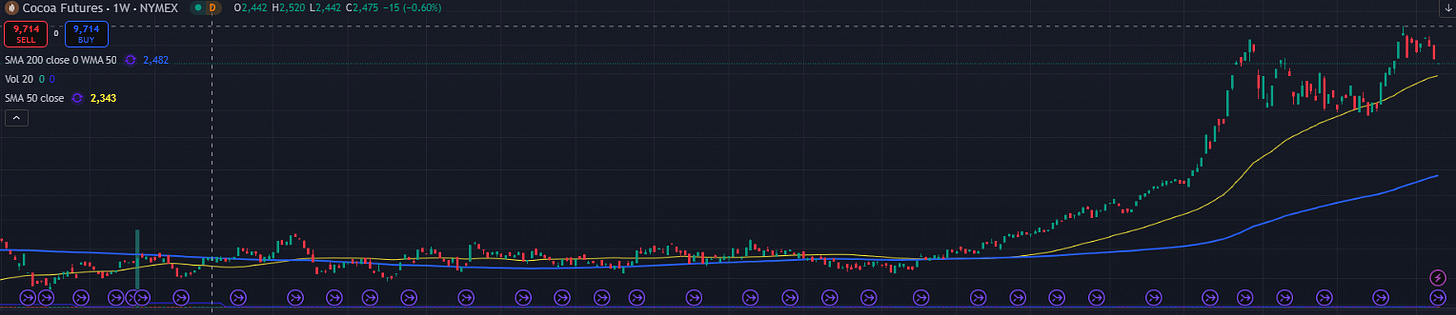
Tradingview: Cacoa futures
This phenomenon raises a question: how much of the current market is driven by speculation rather than real value?
Speculation can lead to extreme price volatility.
Investors often react to trends rather than historical data.
But it seems that investors don't look back into history too often. Many investors overlook historical trends that could inform their decisions.
Impact of Contemporary Trends
Contemporary trends, such as the AI craze, also affect investment perspectives. The buzz around technology can overshadow traditional sectors like natural resources. Investors may perceive tech stocks as the future, leading to a neglect of commodities. This shift can skew market valuations, making natural resource stocks appear less attractive.
Current tech overvaluations impact perceptions of natural resources.
Investors often adopt a short-term view, missing longer cycles.
For example, the current energy stock weighting in the S&P is just 1.9%, compared to a long-term average of 14%. This stark contrast suggests that many investors are missing out on potential opportunities in the energy sector.
Market Memory and Decision-Making
Differences in market memory also play a role in decision-making among investors. Many tend to forget past market cycles, which can lead to repeated mistakes. The historical context is essential. For instance, commodities have been undervalued relative to equities during significant market downturns in the past. Recognizing these patterns could help investors make more informed choices.
In summary, the current market dynamics reflect a complex interplay of speculation, contemporary trends, and historical memory. Investors need to be aware of these factors to navigate the commodities market effectively. It’s surprising how little investors reference historical commodity valuations, which could guide them toward better investment decisions.
Gold and Uranium Stocks: The Treasure Trove of Today's Market
The current landscape of gold and uranium stocks presents a unique opportunity for investors. With gold priced at around $2,900, many stocks appear undervalued compared to historical prices. This situation invites a closer look at investment strategies that can capitalize on these undervalued assets.
Evaluation of Gold and Uranium Stocks
Historically, commodities like gold and uranium have experienced extreme undervaluation. Notably, as pointed out that similar conditions existed in 1929, 1969, 1999, and 2020. During these times, commodities outperformed equities significantly. Today, we see echoes of these past trends.
Leigh Goehring (Goehring and Rozencwajg), an expert in the field, stated,
"Gold stocks on average, especially smaller companies, are as cheap as they've ever been."
This sentiment underscores the potential for growth in the gold sector especially the mining stocks. The current prices suggest that many gold stocks are trading at levels reminiscent of previous market lows. Investors should consider this when evaluating their portfolios.
Investment Strategies for Undervalued Stocks
Investors looking to capitalize on undervalued stocks should focus on a few key strategies:
Research and Analysis: Conduct thorough research on gold and uranium companies. Look for those with strong fundamentals.
Diversification: Spread investments across various stocks within the gold and uranium sectors to mitigate risk.
Long-term Perspective: Understand that these investments may take time to yield results, especially in a volatile market.
With uranium facing supply challenges due to project delays, the demand for this resource is expected to rise again. This creates a favorable environment for investors willing to take calculated risks.
Anticipated Shifts in Energy Markets
Energy markets are also evolving. Natural gas is gaining attention as electricity demand surges. Despite a prevailing negative sentiment, the decline in US natural gas production could lead to attractive investment opportunities.
Investors should keep an eye on these shifts, as these stocks gone nowhere the last 20 years plus.
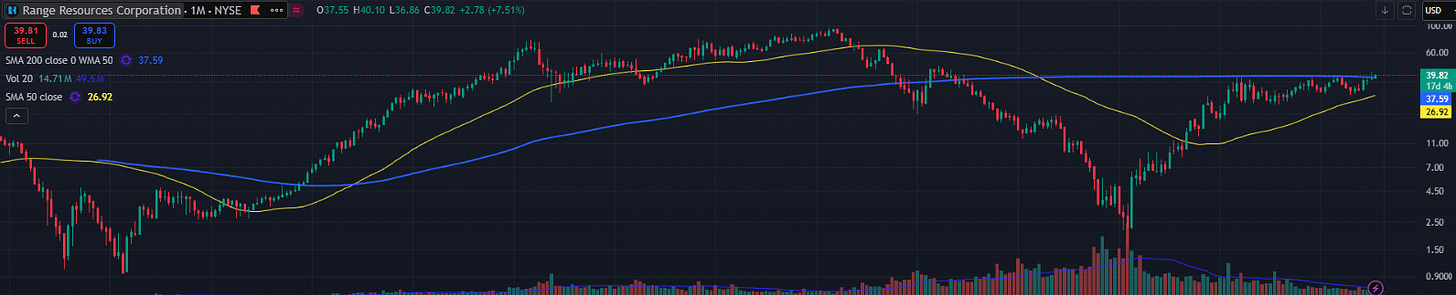
Tradingview: Range Ressouces (Ticker: RRC) from 1998 to 02/25
In conclusion, the current market conditions for gold, natural gas and uranium stocks reveal immense potential. With historical parallels suggesting a resurgence in commodity prices, investors have a unique opportunity to explore undervalued assets. As the energy landscape shifts, staying informed will be key to navigating these promising markets.